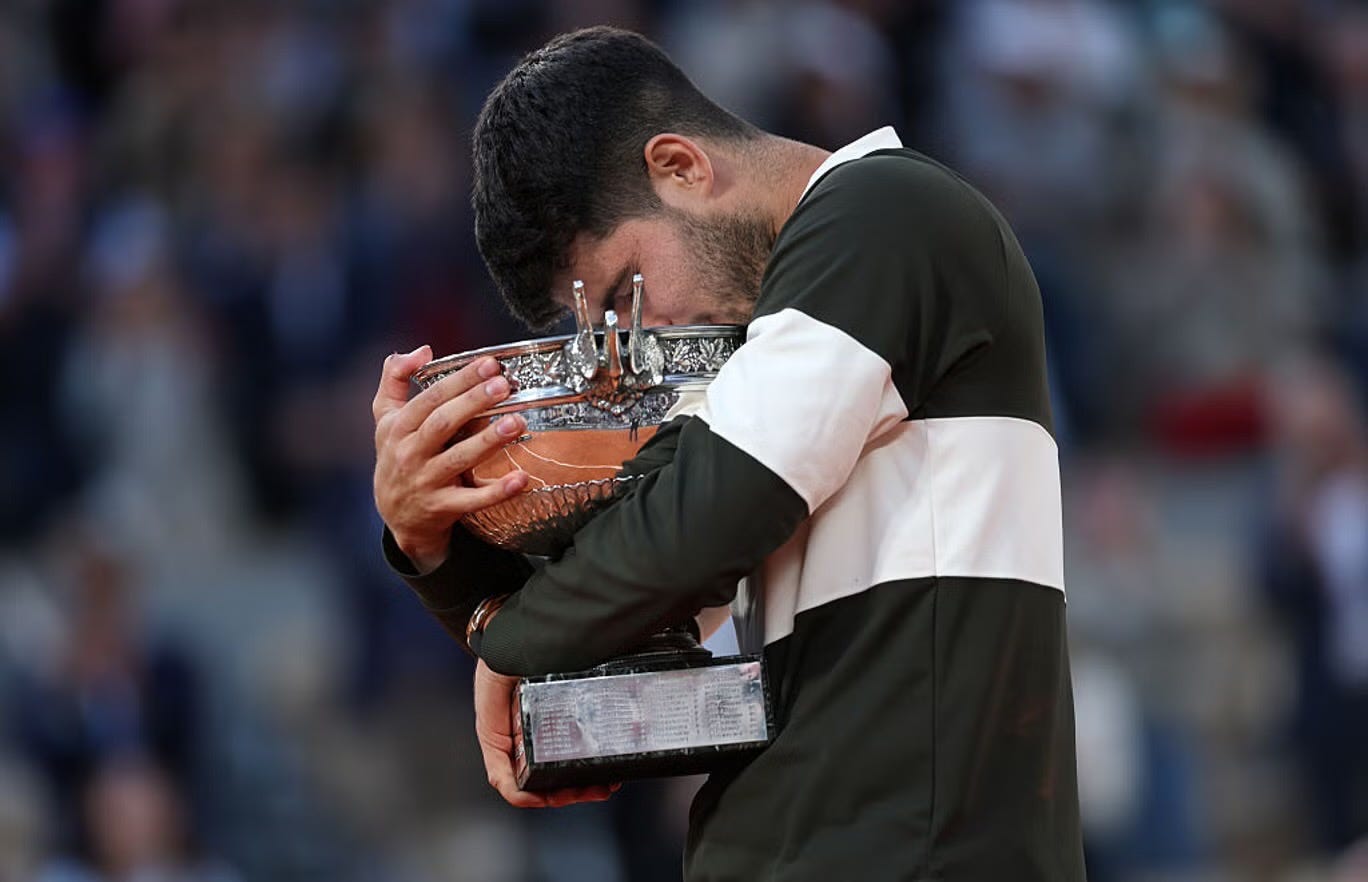
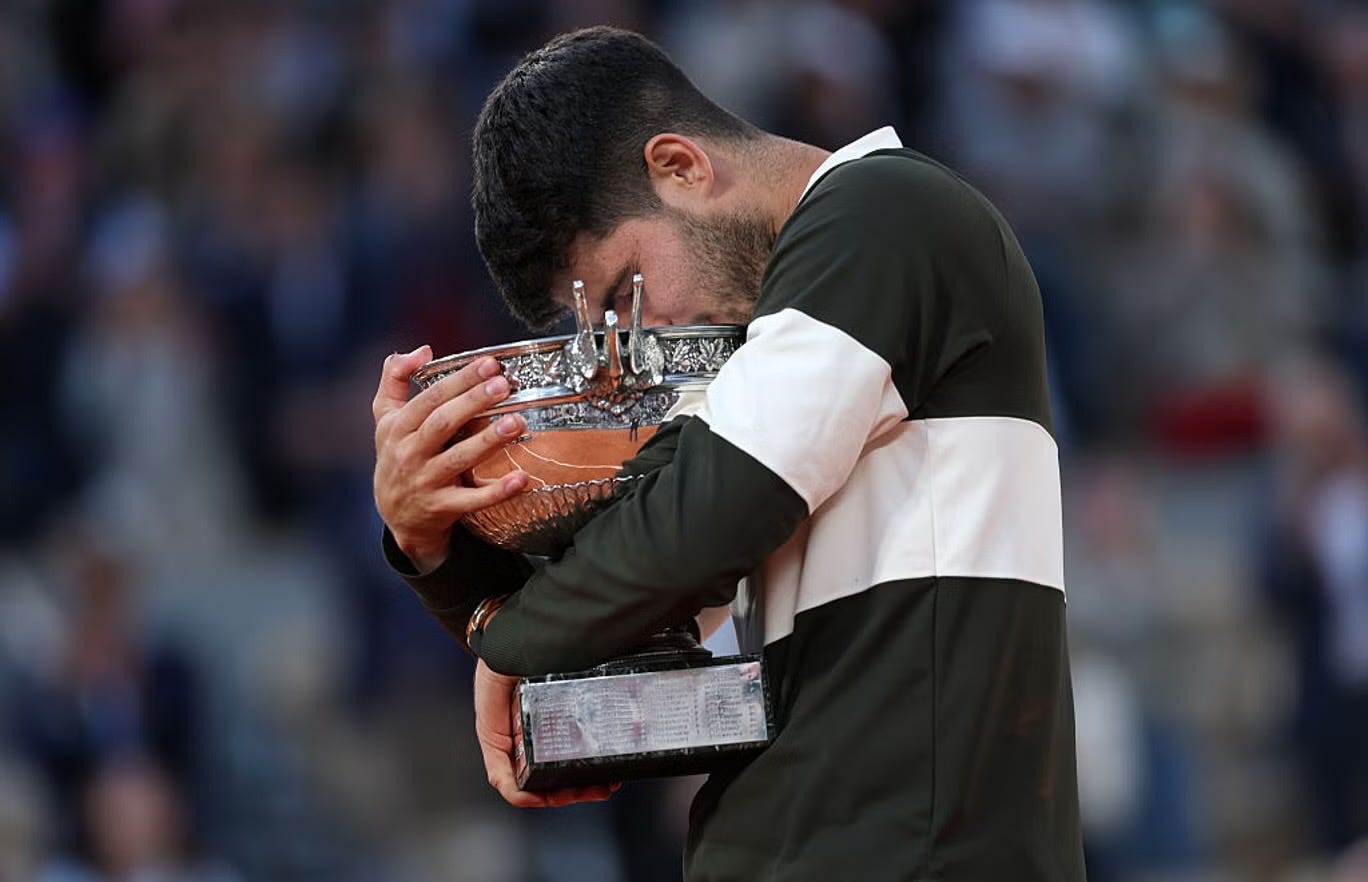
Five hours and twenty-nine minutes. That’s the amount of time it took to decide the winner between Italian tennis world number one, Janik Sinner and Carlos Alcaraz — his greatest adversary and now his conqueror.
Tennis is a game littered with iconic moments: blistering forehands, delicious dropshots, and rousing rallies rhythmically and religiously followed by the gaze of a hushed crowd. The noise and the groans from the players suggest a sport that is not easy even at its most simple.
Now imagine that for a minute short of five-and-a-half hours. It’s nothing short of astonishing. A masterpiece. The quality of the tennis played by Sinner and Alcaraz at the French Open final makes for a historic point in the game.
Sinner, 23, and a three-time Grand Slam winner raced into an early 6-4 7-6 lead. In tennis, convenience is dangerous. Comfort can be crushing and Sinner soon learned that. Alcaraz was defiant. With his back to the ground, he still managed to rise. Resilience is a critical quality of top winners in sports and life.
In his 2024 Commencement Address at Dartmouth College, Roger Federer, a man who has been in critical positions during epic tennis games pointed to the imperfect nature of the sport. Even the best lose critical points.
“You can work harder than you thought possible and still lose” he said. That’s a statement that’d perfectly describe Sinner’s moment in the final.
The Swiss 20-time Grand Slam winner also stated a point that’d best describe Alcaraz’s relentless drive in that final game at Roland Garros.
“Negative energy is wasted energy,” Federer said. “You want to become a master at overcoming hard moments.”
Alcaraz overcame a hard moment against an opponent who can’t be overcome except he played at his best. He won the final three sets 6-4 7-6 7-6 (10-2) to win his fifth Grand Slam and his consecutive French Open. It didn’t come on a platter of gold.
Sinner led, was dominating spells and winning points. The numbers tell the story. He won 193 points, one more than Alcaraz but the Spaniard never looked deterred like he deliberately saved his masterstroke for the death. Sinner played 722 ground strokes, and Alcaraz played 711.
There were nervy moments for both players and they were pushed to the limits by the other. To overcome great adversaries comes with a blend of gift and grit. Alcaraz showed both with his back to the wall. Even while Sinner pushed to recover from his wobbly position, Alcaraz pushed.
There’s something exciting about pushing in life. It attracts positivity. There’s a natural pulling effect it gives. As you push for triumph, success pulls towards you.
Alcaraz didn’t have to be faultless — he had many faults. He never had to be perfect as that’d be impossible. He only needed to fight, apply and keep going, and he did that superbly.
In his career, he’s never come back from two sets down to win a game but at the most crucial moment yet of his career, he rose and conquered from a position of defeat.
Sinner may have gone home sullen about how a potentially triumphant outing had a different ending but he’d have learnt that mentality monsters like Alcaraz just never die until they are buried.
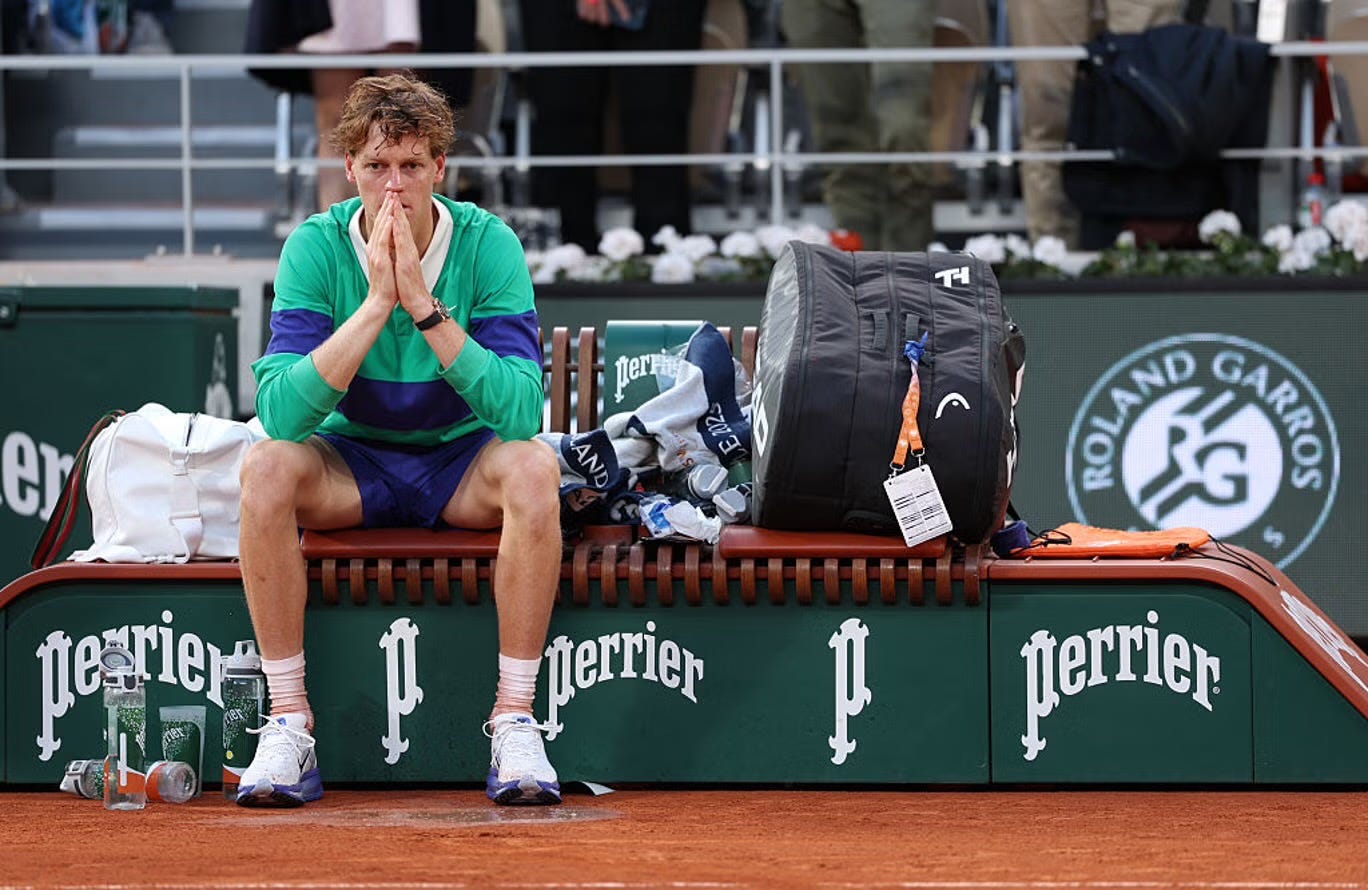
The Italian would look back at the game and bite his fingers at the opportunities missed but it’s a slippery slope, a painful point — a human obsession with negative energy that cuts out celebrations. He said he’d not sleep that night. Sinner will have his day where his application of that bitter experience will lead to a sweet ending. But not that night.
The finest performers in life are supple. They bend to the demands of the moment and apply themselves accordingly. Tennis tests the limit of players. It brings mentality and physicality out in the open and those are the qualities high performers never joke with. Alcaraz showed that drive in what was a big tennis moment.
The Roland Garros audience enjoyed an electric and eclectic tennis from two young players who would become greats in the sport (should their lives go as planned) and can only look forward to more of it. The fun of life is that, at the highest point of pain, and the summit of human performance, even defeat is entertaining to the crowd. Victory, at the end, is personal. And if it’s pain, even much so.
Originally published on Wolf of Words Street.