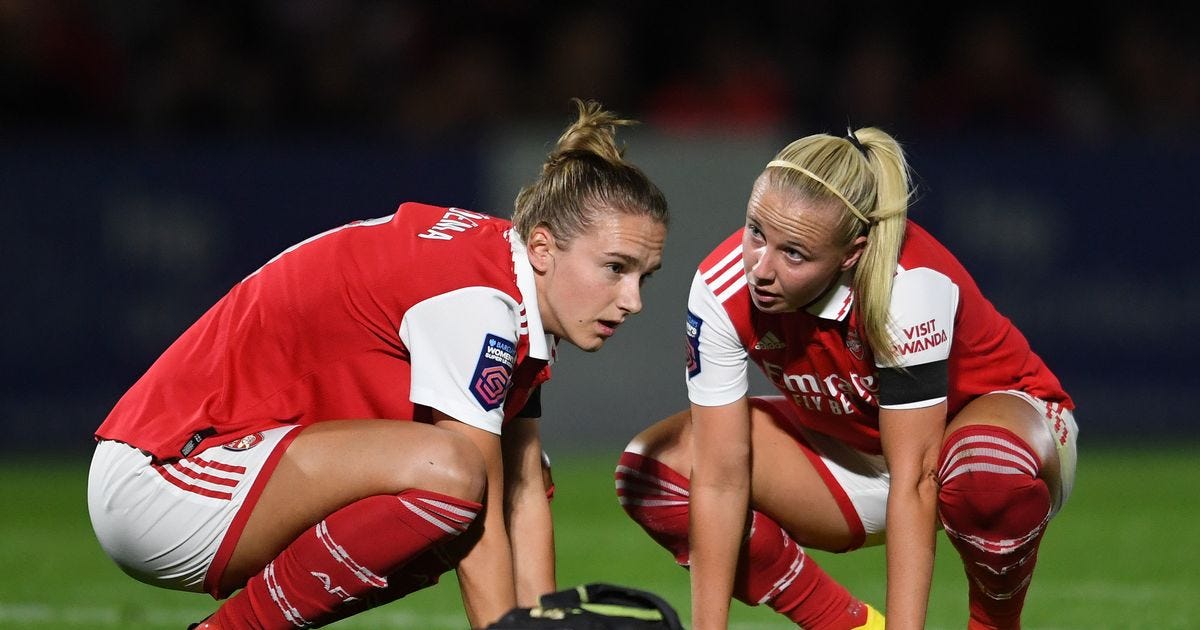
The past one year has come with great growth in the women’s game. More fans are now willing to watch women play football and the intensity of the game is getting higher than ever.
At the Emirates on Monday, Arsenal Ladies saw up to 60,000 fans come in to watch their women face Wolfsburg. This is in addition to the many great feats in the last one year including Barcelona Femeni playing in front of a club record crowd and England Women achieving a record attendance of any English team at the Wembley when they won the Euros in 2022.
There are pointers to massive acceptance of the women’s game. In the last 12 months, there’s more than a 12% increase in the number of girls who want to play football according to the English F.A. Girls now write female footballers’ names on their backs. In Nigeria, Asisat Oshoala, arguably the biggest and most global female footballer to have come out of the country, is as famous as the most famous Super Eagles player and represents a major shift in the cultural perception of the women’s game. Women footballers continue to break these barriers and the game keeps seeing massive improvement, both in quality of play and fans’ interest.
Despite this impressive growth in the women’s game and an enormous opportunity for more, there’s an elephant in the room – the anterior cruciate ligament (ACL). The ligament, which is a connection between the femur (thigh bone) and the tibia (shin bone), helps to stabilise the knee during extension and hypertension especially. It also keeps the knee in shape during rotation movements which when awkward, can lead to the rupture of the joint. The ACL is one of the most important structural elements of a sportsperson’s anatomy. It is a very strong ligament but is hardly elastic which means when it’s overstretched, it can tear or rupture. In addition, the lack of clear understanding of the interplay in a sportswoman’s physiology has become a problem.
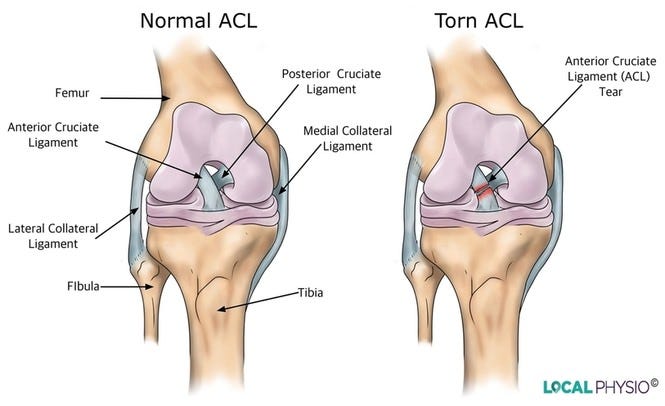
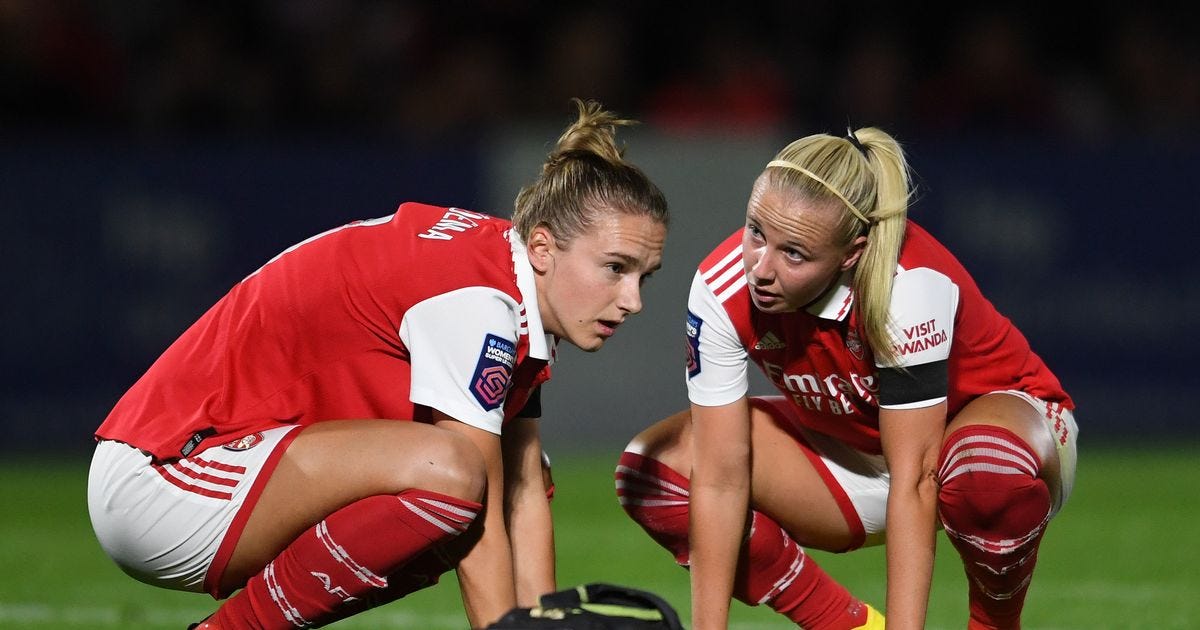
A damage to the ACL is one of the most-feared injuries in professional sports. Now imagine a female footballer being at risk of sustaining the injury at least six times more than a male footballer. In 2022, five of the twenty nominees for the Women’s Ballon D’Or sustained a damaged anterior cruciate ligament injury. It is an injury that takes time to heal and this means many teams lose their best players to such eventualities. In England’s Women’s Super League, more than ten players have sustained an ACL injury this season alone, including two of Arsenal’s best players – Beth Mead and Leah Williamson. Williamson, who is also the England Women’s captain will miss out on the World Cup as a result of the injury.
The reason for the predisposition of a female footballer to knee joint ligament damage is yet to be completely understood. While very few researchers have mentioned the menstrual cycle and the high secretion of oestrogen as a reason for the less sturdy nature of the sportswoman’s knee joint, others have also cited the anatomy of the female footballer’s legs, for example, the angle of a female’s tibia as a reason.
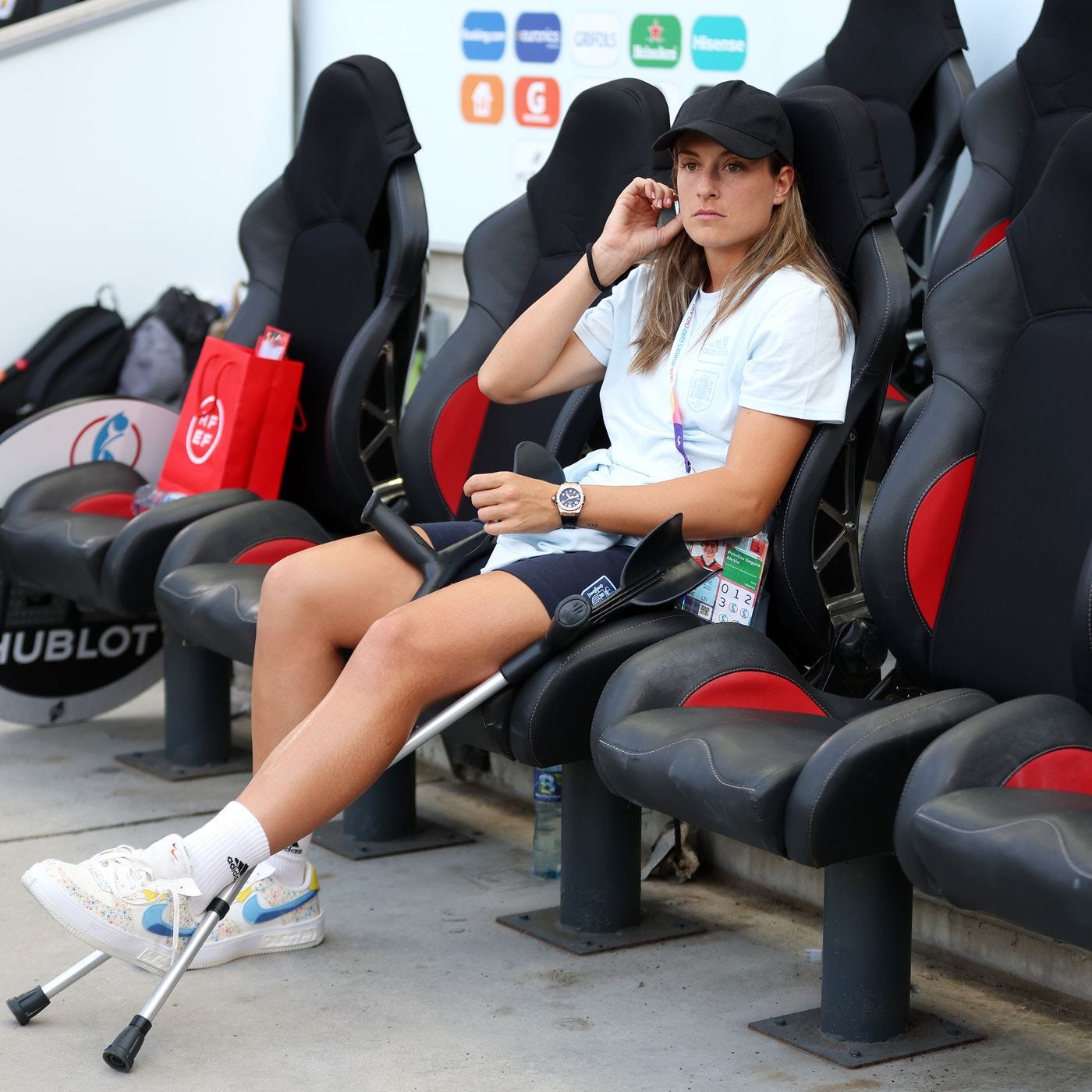
Alexis Putellas/ Barca Blaugranes
ACL Specialist, Andy Williams said the knock-knee alignment of most female footballers, in comparison to the bowed legs seen in most male footballers, may be a predisposing factor.
“Within the middle of the knee joint at the end of the femur, which has a notch in it, that notch might be smaller (in women) and that’s where the ACL lives. If that notch is smaller it means there’s less room for excursion of the ligament and it’s more likely to get chopped by the femur moving onto it.
“There are other aspects such as strength and weight-to-power ratio. There’s even been a link to the menstrual cycle and that does seem to be an issue. Whether it’s direct or indirect is very hard to know,” he revealed on TheAthletic Women’s Football Podcast.
The attention of the world will soon turn to Australia and New Zealand where the best players will parade at the Women’s World Cup. As more players push to avoid a barely avoidable injury, football authorities must also be willing to help women enjoy the game.
Research into the cause of the higher propensity of an ACL injury in women is important, and the upsides of the women’s game are incredible. In a few years to come, the competition will be higher, and the level will be much better. For women’s football to grow and scale into a profitable venture and find its strongest voice, more than an avenue at seeking gender balance, the best players have to be kept fit. The danger currently doesn’t guarantee that we’ll always see the female players we want to watch, and that’s what fans pay for. Tickets cannot be cheap forever.
Originally published on Wolf of Words Street.