Many football dreams die before a player makes his professional debut. It’s an occurrence that’s all too common, and Abiola Dauda has witnessed many of them. He’s seen young players fall by the wayside, some with incredible abilities and an abundance of talent. Without role models and knowledgeable advisers, they soon become grim statistics: yet another failed football project.
Dauda wasn’t going to become another statistic.
Growing up in Lagos came with its challenges, but they were bottlenecks he anticipated. He was prepared for the road ahead and understood that his talent would only take him so far; it needed to be moulded by hard work. He worked his fingers to the bone.
When he got the opportunity to live his lifelong dream of becoming a professional footballer, he gave it everything it demanded. Coming from a country where almost every child who knows how to kick any round object harbours the ambition of someday playing in the big leagues, he understood how fierce the competition for places was.
He understood the assignment. The challenges, limitations and roadblocks ahead were clear. Like every aspiring footballer, he dreamed of playing at the highest level, but the reality demanded more of him. He answered many of those questions along the way.
After spending nearly two decades across different European countries including Sweden, Serbia, the Netherlands, Scotland, Turkey, Belarus and Greece, including a short stop in India, playing in front of some of the wildest crowds and under some of the most difficult conditions, Dauda has built a name he looks back on with considerable pride and fulfilment.
It wasn’t always glamorous. What goes on beyond the pitch make for mixed reflections – sometimes sweet, sometimes sordid. The life of a professional footballer is lonelier and more monotonous than many people outside the game may imagine. But Dauda made the most of his career, forged lifelong friendships and built relationships that remain a core part of his present and will undoubtedly feature in his future.
He is comfortable in his skin and happy to share his experiences with the world, as he regularly does on X. Beyond active professional football, he’s gradually building an identity that reflects the experiences and knowledge accumulated over a long and rewarding career
He’s played in demanding dressing rooms, been challenged by difficult systems and overcome adversity throughout his career. But unlike many others, his understanding of adversity strikes an almost philosophical note. He sees it as an unavoidable part of the human experience, something to embrace rather than escape.
Every step is an adversity.
If you travel to a new country, encounter a different climate, adapt to an unfamiliar lifestyle and culture, or set new objectives and ambitions, you’re overcoming adversity. It’s present in almost every step we take as humans. You can’t run away from it.
Dauda has experienced some of the greatest challenges a professional footballer can encounter. He left Nigeria for Sweden in 2006 after impressing at a tournament in Lagos. Despite moving from a scorching climate to the cold of Sweden, he never entertained thoughts of returning home, especially empty-handed.
Conversations with Nigerian footballers abroad lend credence to the difficulties of adapting to European life. Away from the bright lights of football nights, the radiant social media posts featuring fancy cars, designer shoes and clothes, players cry in their bedrooms, reach out to their families for comfort and, when they can no longer cope, return home.
Dauda was determined to make it work. He said he’d learned to deprive himself of the comfort of home before travelling.
There were times I left the house for three months when I was in Nigeria. I only told my family wherever I was for them to know I’m safe. I knew a time would come when I’d have to leave the comfort of the home, and it helped me when I moved abroad.
After a year at Sölvesborgs, learning Swedish culture and adjusting to a life he would eventually come to love, Dauda moved to a bigger club, Kalmar FF. He spent five years there before joining Serbian giants Red Star Belgrade, the most decorated club in the Balkans, during one of the most testing periods in the club’s history.
The harsh realities of that time did little to reduce the pressure associated with playing for a club of Red Star’s stature.
A club of its size and history, regardless of its circumstances, demanded a different level of mental and emotional application. It was a reality that initially took Dauda by surprise.
Nothing prepared me for Red Star Belgrade!
The demand was through the roof. You have to win the fans on your side, play well consistently and win titles. When I played there, it was a difficult period for the club because we played for months without money sometimes, and I had my personal struggles too. It wasn’t easy.
Dauda recalls his first few months at Red Star as some of the most taxing of his career. The club is renowned for its intimidating atmosphere, while the Belgrade derby against Partizan is regarded as one of football’s most fiercely contested rivalries.
On my debut, I was having a warm-up right in front of the fans behind the bench, and the fans were cheering. I was full of nerves. It was a massive crowd. I had to switch my mentality because it was the first time I’d seen such a crowd.
Luckily, I’d developed a strong winning mentality when I played in Sweden. Going to Sweden before I moved to Serbia was important, but it was nothing like what I experienced at Red Star, although I was grateful I went there first.
Scoring my first goal was a great feeling despite everything going on because the club still had ambition. We had no water and money sometimes, but that was why winning the title was such a special achievement. It came under very difficult circumstances.
Red Star’s league title triumph in 2014 proved to be a defining moment in the club’s recent history, ending a period of domestic dominance by Partizan Belgrade. Before Dauda helped Red Star to the title, Partizan had won the Serbian league for six consecutive seasons. Red Star would subsequently re-establish its dominance, winning the title ten times in the twelve seasons that followed their 2014 triumph.
It wasn’t easy playing, but I worked hard. I knew good clubs in Europe were watching me. The club’s Sporting Director was also encouraging me to work hard and assured me that admirers would come if I continued doing that.
There were interests from Espanyol and Zaragoza, but there was a lot of corruption in the team too. The moves never materialised. That could have made a lot of difference. Many people wanted to get a piece of the pie, but it’s one of the sacrifices you make in the game.
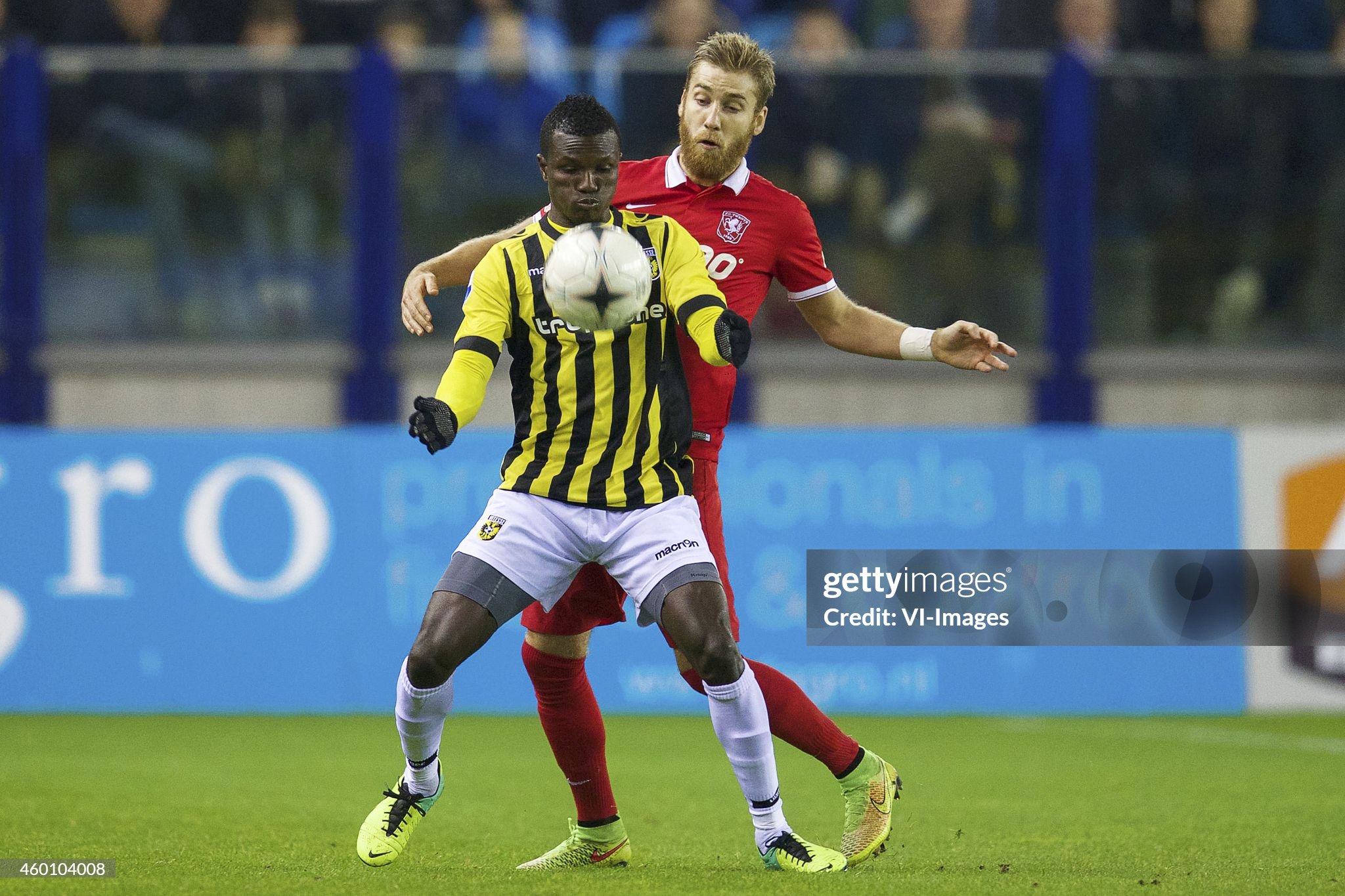
After an exceptionally successful campaign at Red Star, Dauda left the club. Dutch side Vitesse Arnhem paid €500,000 for his services, but his time there would teach him a different lesson: patience.
He played under Peter Bosz, now the manager of PSV Eindhoven, and was exposed to what he describes as the ‘highest standards’.
With Chelsea loanees arriving at the club in numbers, Dauda had to prove himself all over again. Vitesse had invested a considerable amount in securing his services, and he expected to have an important role in the team. But competition for places, particularly with the influx of Chelsea’s young talents, made regular playing time difficult to come by.
It was a difficult period. I’d joined from Red Star for good money and expected to play, but after a few weeks, I was getting constantly overlooked despite scoring consistently for the reserves. I approached the manager to demand to play. He told me about the boys from Chelsea, which I understood, but I wasn’t getting any younger and I needed to play too.
Some of the players from that team were great guys. There was Josh McEachran from Chelsea. We also had Bertrand Traore at some point, and they were good guys. But I had to ask questions of the coach because I trained very well too.
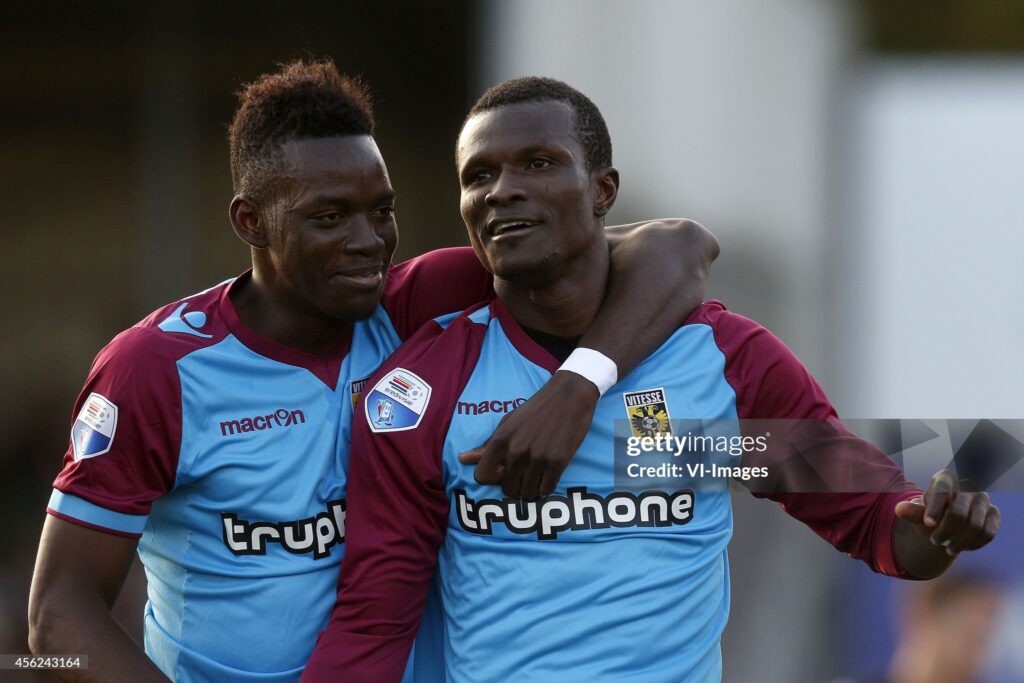
Despite not playing, I got on well with those guys because I was always jovial. It was always easy to talk to me, and, as I’ve been told before by some friends, it’s easy to help me.
It was a reminder that succeeding in football requires more than talent. Understanding the decisions that shape a player’s career is equally important.
Dauda takes these lessons seriously, particularly as he becomes increasingly interested in education, football administration and the decisions made behind closed doors.
More footballers are beginning to understand the value of education as they witness former professionals struggle financially after retirement. According to XPro, an organisation supporting retired footballers, two in every five footballers experience severe bankruptcy within five years of retirement.
Dauda says he’s always understood the importance of being knowledgeable about the game to which he’s devoted a significant part of his life.
Even while adjusting to the Swedish climate and culture, he was keen to understand how the football industry worked. He learnt from his agent and lawyers, asked questions and made a conscious effort to understand what was happening around him.
I have the privilege of having a good ear. I grasp things fast, and they are of great value to me. I ask questions a lot too. I want to know how the decisions are made. It’s not just about the money. You have to understand what’s happening behind your back.
I’ve been on many courses on the FIFA website, Football Diploma on Barcelona Hub, etc.
Dauda’s pursuit of greater agency, the ability to take control of his decisions and determine the direction of his career, has also made him attentive to the experiences of footballers with greater exposure and knowledge.
One encounter, however, stands out above the rest.
At Greek club Apollon Smyrnis, he met a former Portugal international who would fundamentally change his perspective on football and professional life. A European Championship winner alongside Cristiano Ronaldo and his Portuguese teammates, the former FC Porto defender became arguably the most influential person Dauda encountered during his playing career.
I wish I had met him earlier. If I knew him earlier, things would have been better for me. The way he trained. His mentality. How he carried himself was different. He was elite.
He’s the most competitive person I’ve ever come across. He was the first to arrive and the last to leave every day.
The man was Bruno Alves.
When Alves spoke, Dauda said he had to listen, recalling his time with the Portuguese defender in Greece with a noticeable admiration in his eyes.
For someone who had already spent years navigating professional football, the encounter was an important reminder that there was still much to learn. Alves’ competitiveness and approach to football left a lasting impression on him.
Dauda’s open-mindedness also allowed him to absorb valuable lessons from others. Alves wasn’t the only person who shaped his understanding of the game, though. He identifies his agent of eleven years, now his business partner, as another significant influence, particularly in teaching him about the intricacies of player contracts and the business of football.
The lessons, relationships and knowledge accumulated over a long playing career now inform Dauda’s business venture, 1863 Group. Through the company, he is involved in managing the careers of two notable Nigerian youngsters: Leeds United’s Leonard Ngenge and FC Molde’s Daniel Daga among others.
It’s an opportunity to put his experiences to work for a new generation of footballers, helping them navigate a profession whose demands extend well beyond what happens on the pitch.
I advise young footballers not to just play football, but to use their minds. They have to take corrections and have the right mentality. Positive mentality isn’t very common among footballers now, but it’s important they have it.
A player like Osimhen would survive any generation because he has a fighter’s mentality. He never gives up. Football needs that.
For all the achievements and experiences that have defined his career, one ambition remained unfulfilled.
It’s difficult to imagine a greater accomplishment for a footballer than representing his country. The honour comes with immense respect and recognition, and for Nigerian players, wearing the green and white of the Super Eagles remains one of the most cherished dreams.
Despite playing professionally for a long time, Dauda never got to represent Nigeria at senior international level, although he came close on a few occasions.
His closest opportunity came in 2012, while he was playing in Sweden. He was performing well in Europe and attracting attention when he received a phone call from the late Stephen Keshi, who encouraged him to keep working hard. What could have been an opportunity to represent his country was interrupted by a knee injury that failed to heal in time.
He’d also rejected approaches from the Swedish national team, holding on to the hope of representing his fatherland.
Despite this ‘regret’, Dauda has little difficulty appreciating what he’s achieved.
I scored more than 150 career goals and played across Europe for almost 20 years. You won’t see that in many places. I wish I played for the Super Eagles, though but it’s in the past now.
It’s a career he’s immensely proud of, and one whose greatest value may yet extend beyond his playing days. Through the 1863 Group, he’s helping younger footballers avoid some of the mistakes and pitfalls he encountered, equipping them with the knowledge and mentality to build sustainable careers.
For a man who has spent nearly two decades learning the intricacies of professional football, there’s perhaps no better way to put those lessons to use than ensuring the next generation doesn’t have to learn everything the hard way.
Dauda was speaking to Rilwan Balogun in the first feature of “More Than A Name”.